


Before the release of Star Wars in 1977, the toy and action figure market was dominated by major players like Mego, Mattel, and Hasbro. These companies mostly adhered to a tried-and-true formula, manufacturing 8-inch action figures and other large-format toys that allowed for minimal expansion into scaled accessories or vehicles. When Star Wars was pitched as a potential licensing opportunity, Mego and Mattel declined, fearing the movie would fail. However, Kenner Products, a smaller, lesser-known manufacturer, saw potential in the project. Known at the time for toys like the Easy-Bake Oven and Spirograph, Kenner took a gamble that would transform its fortunes and revolutionize the toy industry.
In the late 1970s, the 8-inch action figure was the industry standard, but this size posed challenges in creating vehicles and accessories true to scale. Kenner introduced a groundbreaking concept: 3 ¾-inch figures. This smaller scale reduced production costs and enabled the creation of a cohesive toy line where figures, vehicles, and playsets were all to scale. This innovation not only enhanced the play experience but also became the industry benchmark. Kenner's success with Star Wars led to widespread adoption of the 3 ¾-inch format, including Hasbro's relaunch of G.I. Joe in 1982, which shifted from its original 12-inch figures to the smaller, Kenner-inspired size.
Although the original Star Wars film debuted in May 1977, Kenner's action figures didn’t hit shelves until 1978. Facing production delays, Kenner created an ingenious solution to meet the demand for the 1977 holiday season: the “Early Bird Certificate” package. Parents could purchase the certificate, which could then be mailed in to receive a four-pack of figures—Luke Skywalker, Princess Leia, R2-D2, and Chewbacca. This innovative approach not only satisfied eager fans but also set the stage for the launch of one of the most successful toy lines in history.
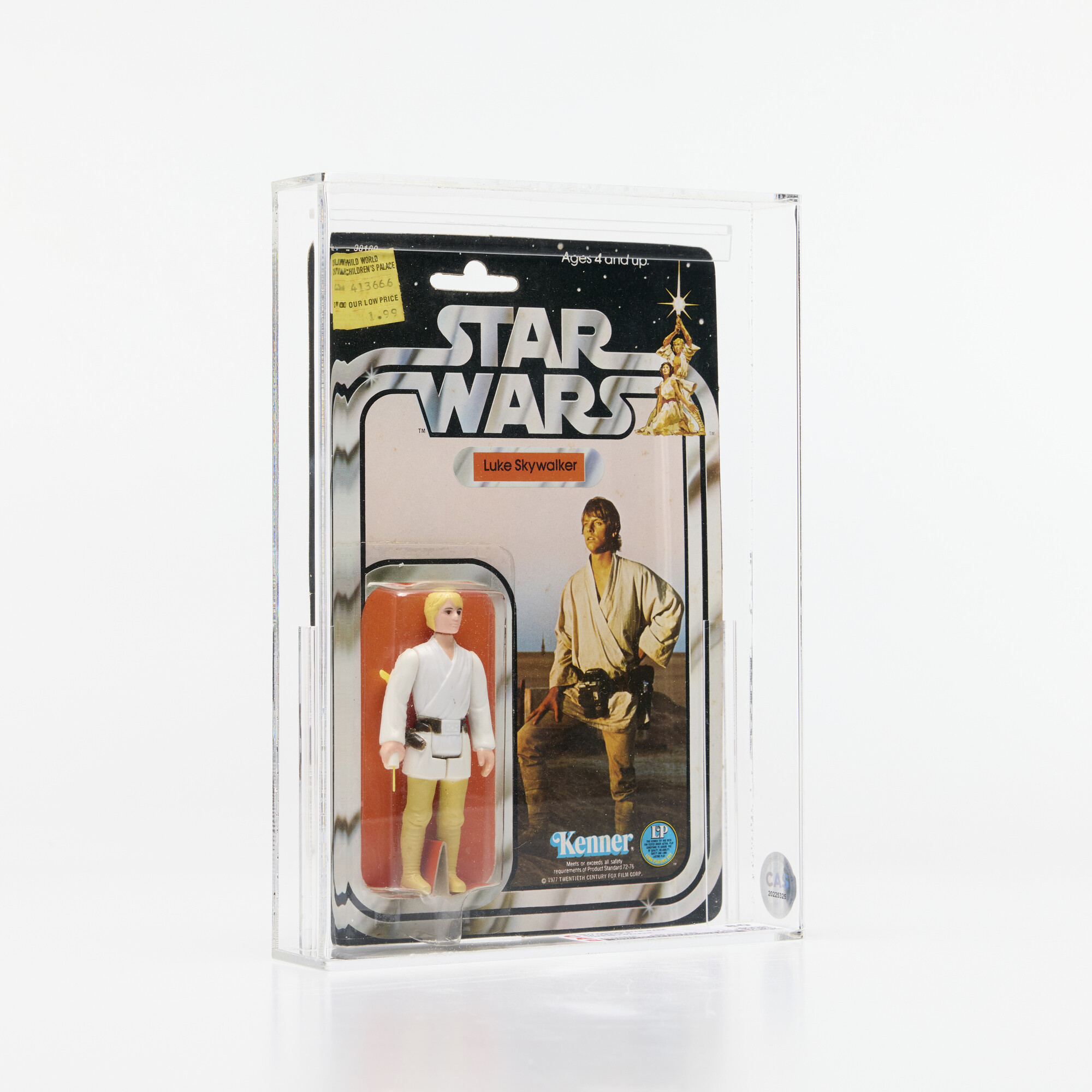

Between 1978 and 1985, Kenner released over 100 unique action figures based on Star Wars characters, selling more than 300 million units worldwide. These figures came in a variety of packaging styles, with collectors often referencing terms like “12 Back,” “20 Back,” or “92 Back” to indicate how many characters were depicted on the card backs as available for purchase. The toy line became a cultural phenomenon, with kids and collectors alike building entire galaxies of play around their favorite heroes, villains, and starships.
Kenner’s Star Wars line forever changed the toy industry, not only for its innovation in scale but for the way it intertwined with the movie experience. As of 2024, Star Wars remains one of the largest media franchises in the world, surpassed only by Pokémon and Mickey Mouse. Its toys continue to be cherished by fans of all ages, with original Kenner figures commanding high prices on the collector market and modern iterations building on the legacy of the 3 ¾-inch scale. What began as a gamble by a small company has become a cornerstone of pop culture, illustrating the power of imagination and innovation.
The Last Son of Krypton: Birth of an American Icon
7:00 pm et